Starters & appetizers
Crispy Egg Katsu with Panko, Step by Step
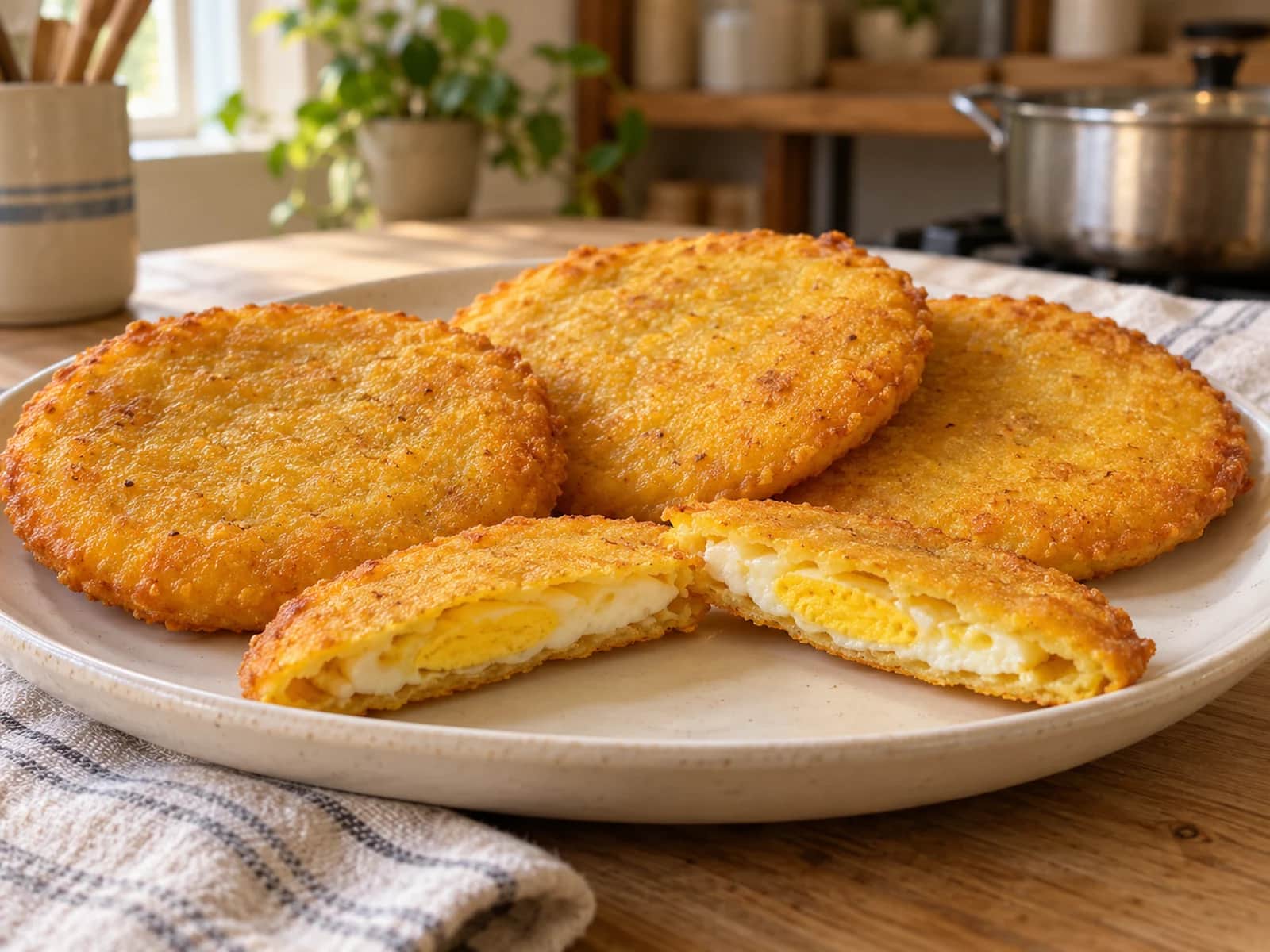
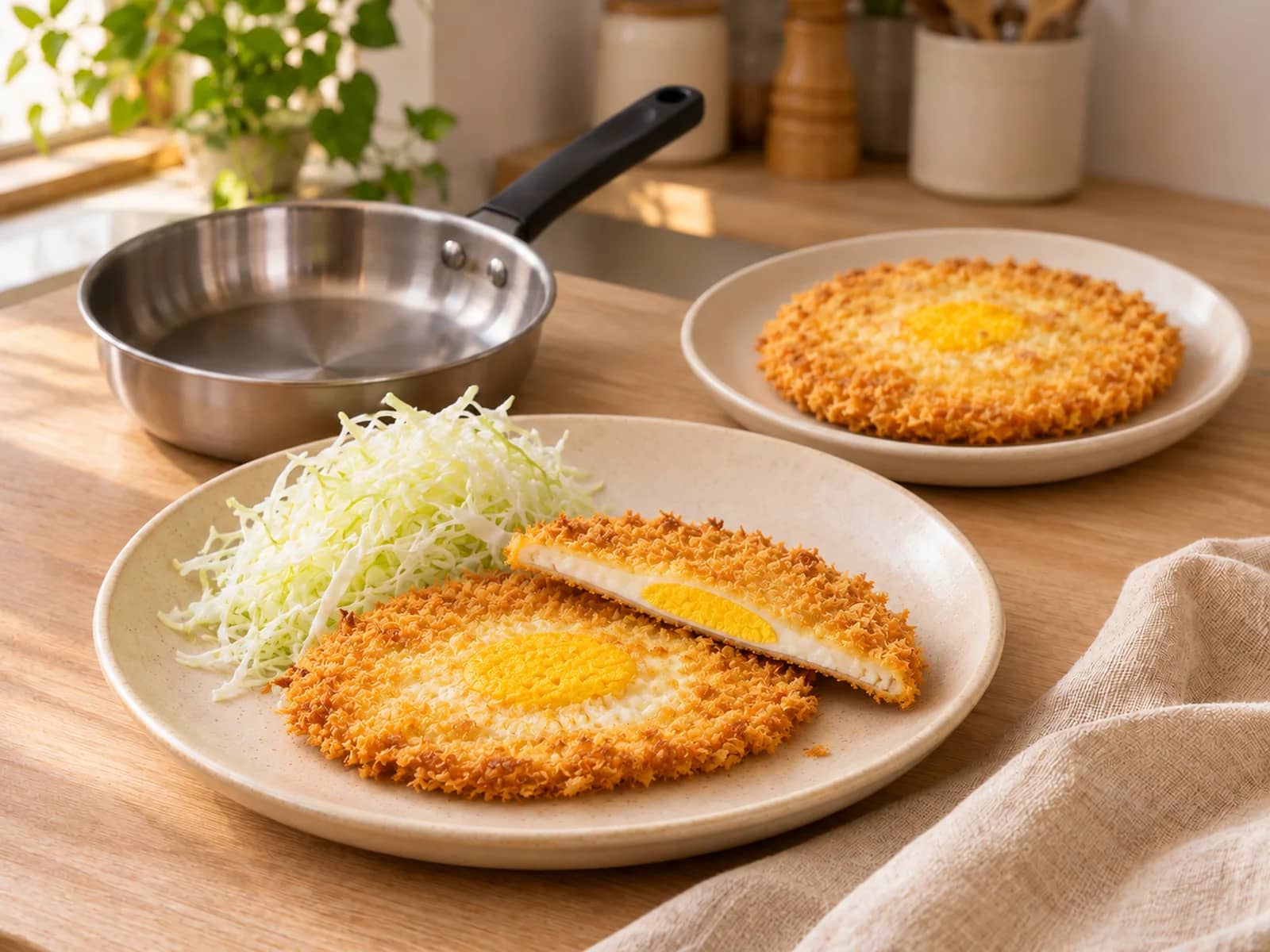
Make egg katsu with a crisp panko coating, without boiling the egg first. Step photos explain coating and frying with a fully cooked yolk.
- Total time
- 30 min
- Preparation
- 10 min
- Cooking
- 20 min
- Servings
- 4
- Difficulty
- Easy
- Cuisine
- Japanese inspired
Ingredients
Quantities adjust to your servings. Times, temperatures and “to taste” stay the same.
Check off the ingredients you already have above.
Method
Follow the recipe one step at a time.
Prepare the workspace
Wash, dry and finely shred the cabbage. Set a rack over a tray. Cut frying-temperature-rated baking parchment small enough to fit well inside the pan. Do not use wax paper.
Set the egg on panko
Line a small shallow bowl with a parchment square. Add a thin panko layer and crack one egg onto it, keeping the yolk intact.
Cover without breaking the yolk
Season with some of the salt and gently cover the entire egg with more panko. Divide the available panko and salt among the eggs; do not press the yolk.
Heat the oil
Heat the oil to 170 °C / 340 °F in a small deep pan about 18 cm / 7 inches across, with roughly 2 cm of oil. Use a thermometer, leave headroom and avoid smoking.
Begin frying
Support the paper with a long slotted spoon and slowly lower the egg close to the oil without splashing. Keep paper inside the pan and away from flames. Spoon a little hot oil over the top until it sets.
Remove paper and finish
Once the egg holds together, remove the paper with long tongs and turn the egg. Fry for roughly 3–4 minutes total, adjusting heat. White and yolk must be firm; continue over gentler heat if needed.
Drain and repeat
Transfer to the rack. Repeat one egg at a time, bringing oil back to 170 °C / 340 °F between batches. Discard any uncooked panko that contacted raw egg.
Serve immediately
Serve each egg with a share of the cabbage. Cut carefully to check the center and enjoy while crisp. If the yolk is still liquid, cook it further before serving.
The step photos are illustrative.
Notes
Tips and storage
Use a stable pan, dry utensils and baking parchment rated by its manufacturer for the temperature; keep paper away from flames. Never add water to hot oil. Cooking time includes heating and four batches; egg size affects doneness. This recipe cooks both white and yolk until firm. Serve promptly; refrigerate leftovers soon at 4 °C / 40 °F or below and reheat to 74 °C / 165 °F, though crispness will decline. Contains egg and wheat. Nutrition assumes 24 g of absorbed oil across the batch, not all 500 ml of frying oil; actual absorption varies.
Sources
Nutrition facts
1 egg katsu with one-quarter of the cabbage
- Protein
- 9.4 g
- Carbohydrates
- 16.9 g
- Fat
- 11.9 g
Estimated per serving; products and yield can change these values.
Reference source: Editorial calculation using generic ingredient profiles
For general information only; it does not replace advice from a qualified health or nutrition professional.
About this recipe
Egg katsu is a fried egg with a light panko crust. Assemble it raw on baking parchment and fry one at a time; no boiling or freezing is needed. This version cooks both white and yolk until firm. Makes 4 appetizer servings with fresh cabbage in about 30 minutes.
Frequently asked questions
Do I boil the egg first?
No. Assemble the raw egg on panko and parchment, cover with more crumbs and fry carefully. It is not a breaded hard-boiled egg.
Can the yolk be runny?
This version cooks both white and yolk until firm. It does not give a short frying time for a raw yolk.
Why is not all the oil counted in nutrition?
The 500 ml is the frying medium, not the amount eaten. The estimate assumes 24 g absorbed by the batch, which can vary.