
Pasta
Homemade Pesto Pasta: Easy Genovese Pesto Made in a Mortar
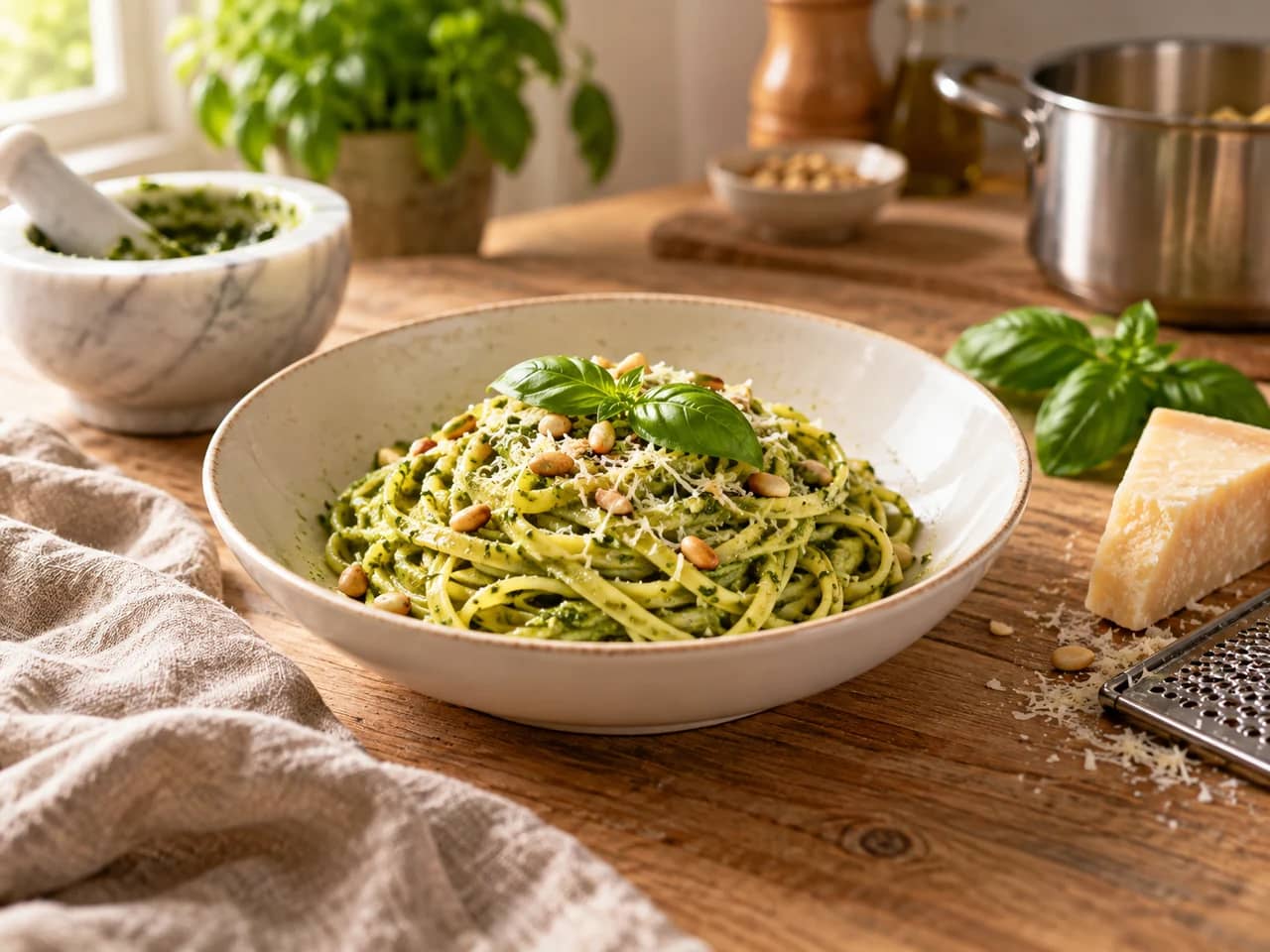
Pesto pasta with a homemade sauce of basil, pine nuts, garlic, Parmesan, pecorino and olive oil made in a mortar. Ready in about 30 minutes.
- Total time
- 32 min
- Servings
- 4
- Difficulty
- Easy
- Cuisine
- Italian
Ingredients
For the pesto
For the pasta
Method
Toast the pine nuts
Toast the pine nuts in a dry skillet over medium-low heat for 2 to 3 minutes, stirring, until just golden. Let them cool.
Prepare the basil
Pick the basil leaves off the stems. Wash them in cold water and dry them well on a cloth, without rubbing, so they do not darken.
Pound the garlic and pine nuts
In the mortar, pound the garlic with the coarse salt into a paste. Add the pine nuts and keep pounding for 1 minute, until you have a coarse cream.
Add the basil
Add the basil in two batches and grind it in circular motions against the sides of the mortar for 3 to 4 minutes, until it forms a green paste.
Stir in the cheese and oil
Add the Parmesan and pecorino and mix. Drizzle in the oil in a thin stream, stirring with the pestle, until the sauce is creamy.
Cook the pasta
Cook the pasta in 4 liters of boiling water with the salt, 1 minute less than the package directions. Before draining, save a cup of the cooking water.
Toss the pasta with the pesto
Drain the pasta and toss it with the pesto in a bowl, off the heat, adding 2 to 4 tablespoons of the cooking water until the sauce is creamy and glossy.
Serve
Serve right away in shallow bowls, topped with a few pine nuts, grated Parmesan and basil leaves.
The step photos are illustrative.
Notes
Tips
- Use small, very fresh basil leaves; large, older leaves make a more bitter pesto.
- Never heat pesto: heat darkens the basil and dulls its aroma.
- If you use a blender or food processor, chill the jar for 10 minutes in the freezer and pulse in short bursts so the basil does not warm up.
- The cooking water is starchy: it is what makes the pesto cling to the pasta without turning oily.
Substitutions
- Pine nuts: walnuts or blanched almonds, which change the flavor slightly.
- Pecorino: more Parmesan, in the same amount.
- Dairy-free: replace the cheeses with 2 tablespoons of nutritional yeast and a pinch more salt.
- Pasta: trofie and trenette are traditional in Genoa; fusilli or penne also work.
Storage
Store leftover pesto in a clean jar, covered with a thin layer of olive oil, in the fridge for up to 3 days. To freeze it, leave out the cheese and freeze in ice cube trays for up to 3 months, adding the cheese when you use it. Dressed pasta should go into the fridge in a closed container within 2 hours and be eaten within 3 to 4 days.
Source: USDA FSIS, leftovers and food safety.
Nutrition facts
1 serving (1/4 of the recipe)
- Protein
- 21.4 g
- Carbohydrates
- 76.6 g
- Fat
- 34.6 g
- Saturated fat
- 7.1 g
- Fiber
- 3.8 g
- Sugars
- 3 g
- Sodium
- 534 mg
Estimated per serving, using dry pasta, basil, pine nuts, Parmesan, pecorino, olive oil and salt.
Reference source: USDA FoodData Central, SR Legacy April 2018
For general information only; it does not replace advice from a qualified health or nutrition professional.
About this recipe
Pesto alla genovese is the most famous sauce from Liguria, in northern Italy. Its name comes from pestare, to pound, because it is traditionally made in a marble mortar with fresh basil, pine nuts, garlic, coarse salt, Parmigiano Reggiano, pecorino and extra virgin olive oil. Pounding instead of blending breaks the leaves without heating them, so the pesto stays green, fragrant and free of bitterness. In Genoa it is served with trofie or trenette; at home it works very well with linguine or spaghetti. The final secret is tossing the pasta and pesto off the heat with a little of the cooking water, so the sauce turns creamy and clings to every strand.
Frequently asked questions
Can I make pesto in a blender?
Yes. Chill the jar first and pulse in short bursts: first garlic, salt and pine nuts, then the basil, and finally the cheese and oil. It is finer than mortar pesto but darkens faster if it warms up.
Why is my pesto bitter or dark?
Usually from blending too long, heating the basil or using a very peppery oil. Blend briefly, never heat the sauce and use a mild oil.
What pasta is best with pesto?
In Liguria they use trofie and trenette. At home, linguine, spaghetti, fusilli or penne all hold the sauce well.
Can I freeze pesto?
Yes, ideally without the cheese. Freeze it in ice cube trays for up to 3 months and stir in the grated cheese after thawing.
What can I use instead of pine nuts?
Walnuts or blanched almonds, in the same amount. The flavor changes a little, but the texture is similar.