
Pasta
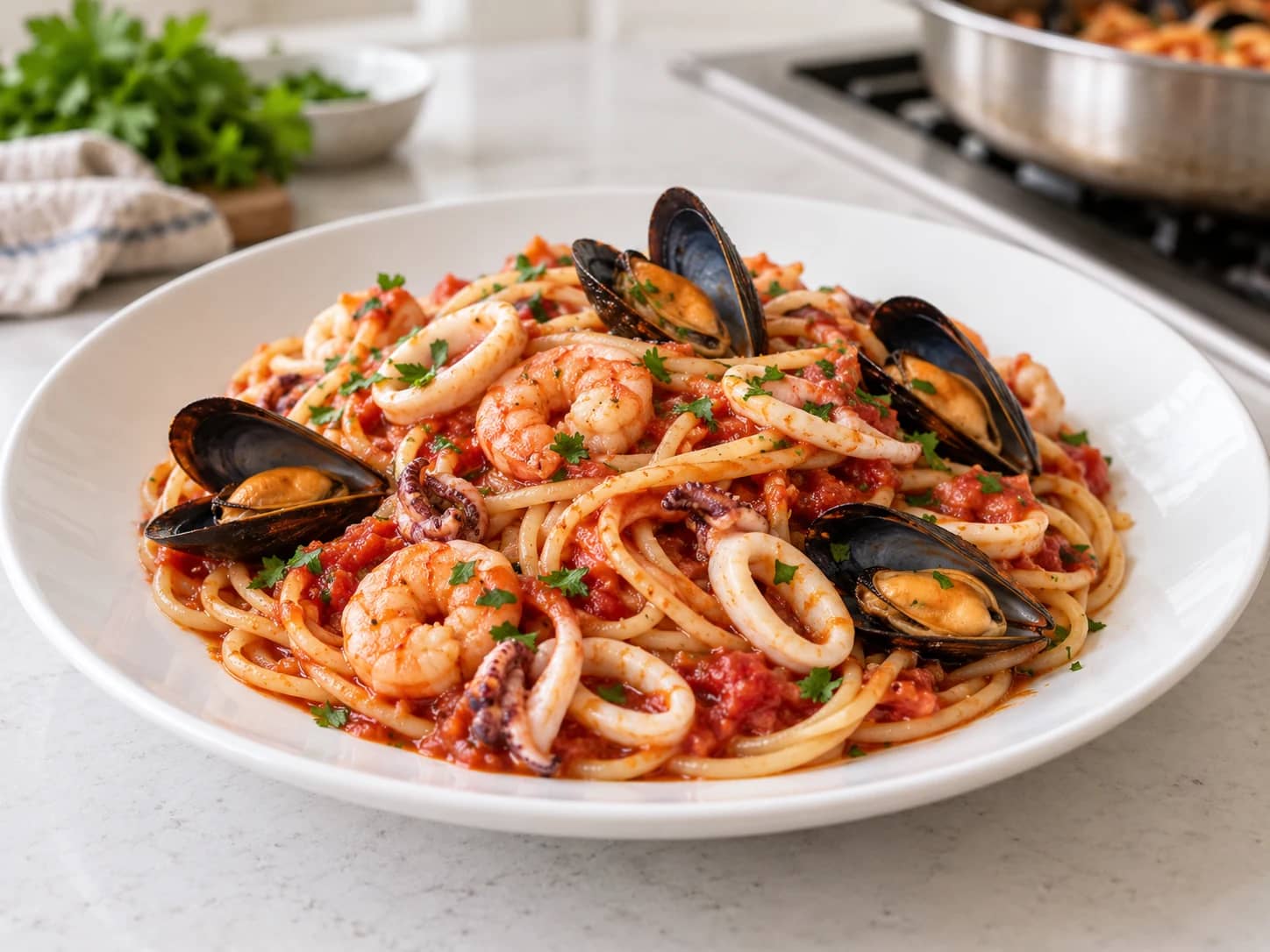
Seafood pasta with tomato sauce
Seafood pasta for 4 with shrimp, squid and mussels: tomato sauce, cooking in stages and clear steps for finishing the spaghetti.
- Total time
- 50 min
- Servings
- 4
- Difficulty
- Medium
- Cuisine
- Mediterranean
Ingredients
Pasta and seafood
Sauce
Cooking
Method
Clean and check the seafood
Use 250 g raw shrimp already peeled and deveined, and 250 g cleaned squid: body without skin or innards, tentacles without the beak. Slice the body into roughly 0.5 cm rings and divide large tentacles. Check the 600 g live shell-on mussels from an approved supplier: discard broken shells and open ones that do not close when gently tapped. Scrub under cold water and remove beards just before cooking; do not leave them submerged in fresh water. Keep seafood separate and refrigerated at 4 °C or below while making the sauce. If shrimp or squid are frozen, thaw in the refrigerator first; this wait is excluded from the 50 minutes.
Chop aromatics and heat water
Chop the 100 g onion and 12 g garlic on a clean board separate from raw seafood. Wash and chop the 8 g parsley. Put the 3 litres pasta water in a roomy pot and bring to the boil without salt: seasoning goes into the sauce. Prepare another lidded pot for mussels and a large skillet for sauce. Wash hands and utensils after handling raw seafood; use a clean bowl for cooked seafood.
Make a quick tomato sauce
Heat the 30 g oil in the skillet over medium heat. Cook onion for 5 minutes until softened without burning. Add garlic and stir for 1 minute. Add the 400 g crushed tomatoes and simmer for 8 minutes, stirring, until some water evaporates and the raw taste diminishes. Keep the sauce hot over low heat. The 14 minutes are a guide; prevent drying out or sticking.
Steam the mussels open
While making sauce, bring the 100 ml water to the boil in the mussel pot. Add cleaned mussels, cover and cook for about 4–5 minutes, carefully shaking the pot once. Lift opened mussels into a clean bowl; discard ones still closed at the end without forcing them open. Save up to 100 ml liquid and pass through a fine strainer lined with clean muslin to remove sand. Add it to the sauce. Leave some mussels in shells for serving and remove flesh from the rest with clean utensils. Keep together only while finishing the dish.
Cook shrimp and squid
Bring the sauce to a gentle simmer and add the 250 g shrimp and 250 g squid. Cook for about 3–4 minutes, stirring, until shrimp are firm and opaque and squid loses translucency. Use a fine thermometer probe to check that the thickest seafood parts reach at least 63 °C; if not, continue and check again. Timing depends on size and starting temperature. Transfer cooked seafood to another clean bowl so it does not keep cooking while pasta finishes. Do not use the raw-seafood bowl.
Cook pasta and save water
Time the start so this stage finishes near the seafood; pasta can cook in parallel. Add the 320 g spaghetti to unsalted boiling water, stir initially to separate strands and cook 2 minutes less than the package al dente time: it will finish in sauce. Before draining, save 150 ml cooking water in a cup. Drain without rinsing. If pasta or seafood needs longer, extend the total; do not rush insufficient cooking.
Finish the pasta in the sauce
Add drained spaghetti to the sauce and toss over medium heat for about 2 minutes until al dente. Add reserved water in 30 ml increments only as needed for sauce to coat pasta without a pool. In the last 30 seconds fold in shrimp, squid, mussels and parsley gently to warm them without breaking them up. Taste with a clean utensil and add the planned 3 g salt, or less if mussel liquid is salty enough; less salt changes estimated sodium. Do not add closed shells or shell fragments.
Serve immediately and chill leftovers
Divide between 4 plates, distributing pasta and all three seafood types evenly. Serve immediately; prolonged heat toughens shrimp and squid. Remove shells before storing leftovers, divide into small containers and refrigerate at 4 °C or below within 2 hours, or 1 hour if ambient temperature exceeds 32 °C. Eat leftovers within 24 hours; reheat only the portion to be eaten, stirring until at least 74 °C in several places. Do not freeze the assembled dish because pasta and seafood textures deteriorate.
The step photos are illustrative.
Notes
Nutrition facts
1 of 4 plates, without shells
- Protein
- 35.3 g
- Carbohydrates
- 74.4 g
- Fat
- 11.4 g
- Saturated fat
- 1.9 g
- Fiber
- 5 g
- Sugars
- 7.6 g
- Sodium
- 973 mg
Nutrition information estimated from the ingredients (USDA FoodData Central). Brands may vary.
Reference source: USDA FoodData Central — SR Legacy (abril de 2018)
For general information only; it does not replace advice from a qualified health or nutrition professional.
About this recipe
This seafood pasta combines spaghetti, shrimp, squid and mussels in a quick sauce of tomato, garlic, onion and parsley. Steam the mussels separately to filter their liquid; cook the remaining seafood in the sauce and set it aside while finishing the pasta. It makes 4 plates: 25 minutes of preparation plus 25 of cooking, 50 in total, with water, pasta and mussels cooking in parallel when possible. Nutrition counts 150 g edible mussel flesh from 600 g shell-on mussels; the actual yield needs weighing.
Frequently asked questions
What should I do with mussels that do not open?
Discard any still closed after cooking; do not force them open to add them. Before cooking, also discard broken shells and open ones that do not close after gentle tapping.
Can I use frozen seafood?
For shrimp and squid, thaw in the refrigerator before starting and weigh peeled or cleaned. Thawing is excluded from the 50 minutes. This recipe uses live shell-on mussels, not a direct substitution with frozen mussels.
How do I prevent dry pasta?
Save 150 ml pasta water and add in 30 ml increments only as needed while finishing spaghetti in sauce. Return seafood at the end to avoid prolonged reheating.