Side dishes
Homemade mozzarella with rennet and citric acid
Make fresh mozzarella with rennet and citric acid. Six photo steps explain milk choice, setting and stretching temperatures, cooling and troubleshooting.
Part of the collection: Everyday dairy products you can make at home
- Total time
- 2 hr
- Preparation
- 25 min
- Cooking
- 20 min
- Rest / waiting
- 1 hr 15 min
- Servings
- 9
- Difficulty
- Easy
- Cuisine
- International
Ingredients
Quantities adjust to your servings. Times, temperatures and “to taste” stay the same.
Check off the ingredients you already have above.
Method
Follow the recipe one step at a time.
Acidify and add rennet
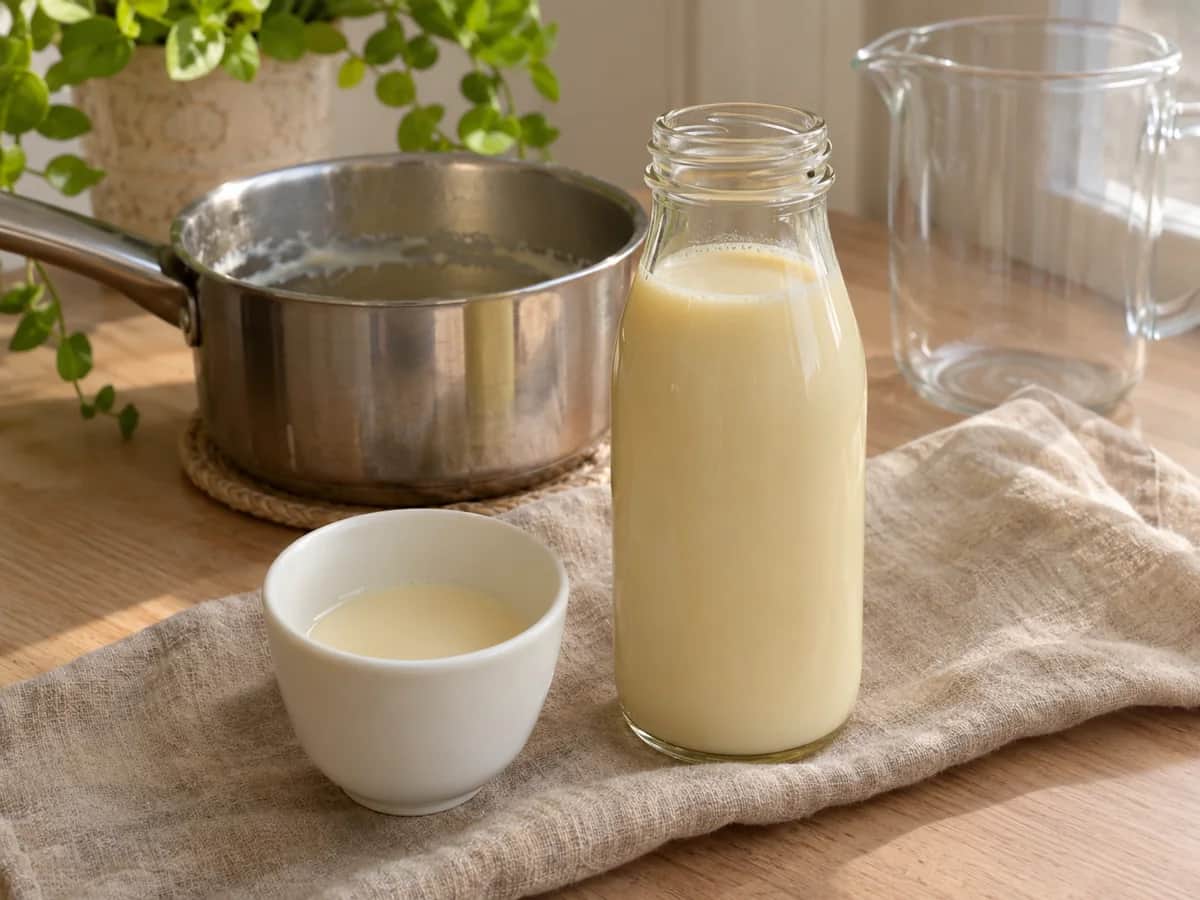
Dissolve citric acid in 250 ml cold water and mix into cold milk. Heat to 32 °C and remove from heat. Dilute rennet in the remaining 60 ml water, add and stir gently for 30 seconds. Dose applies to the stated strength; check the label.
Set and cut
Cover and rest undisturbed for 10 minutes. Once there is a clean break, cut 2.5 cm squares and wait 5 minutes. If too soft, allow up to 20 more minutes; do not break up liquid curd.
Heat and drain
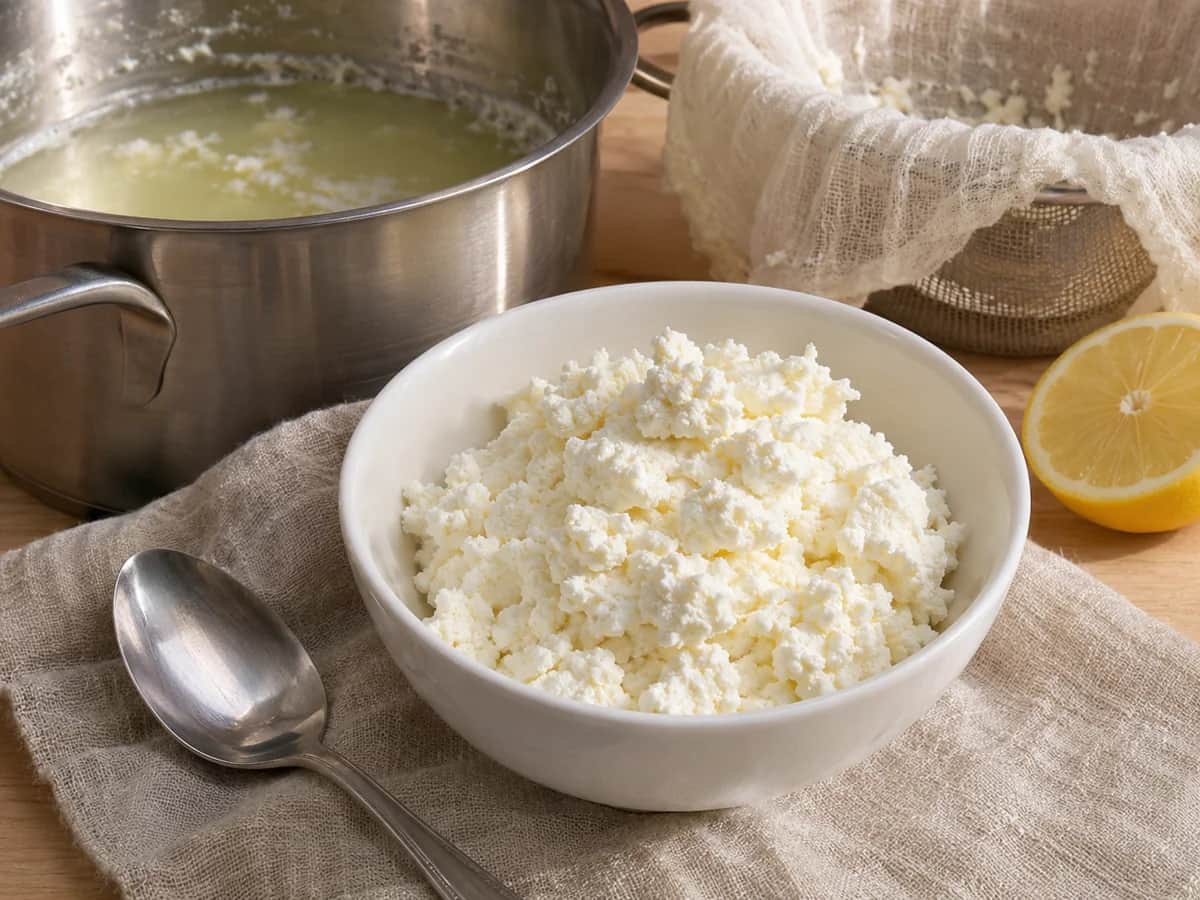
Warm slowly to 42–43 °C, moving curds gently. Remove from heat and stir for 2 minutes. Ladle into a strainer, drain 5 minutes and distribute the salt. Avoid hard squeezing.
Warm and stretch
Heat part of the bath water to about 80 °C. Using a slotted spoon and food-safe heat-resistant gloves, immerse portions until curd reaches about 57–60 °C and comes together. Gently stretch and fold 2–3 times until smooth. Never put bare hands in hot water.
Shape and cool
Tuck edges underneath to make balls without overworking. Cool in the remaining water with ice for about 10 minutes to set the shape. Add bath water as needed; process water is not recipe yield.
Store and serve
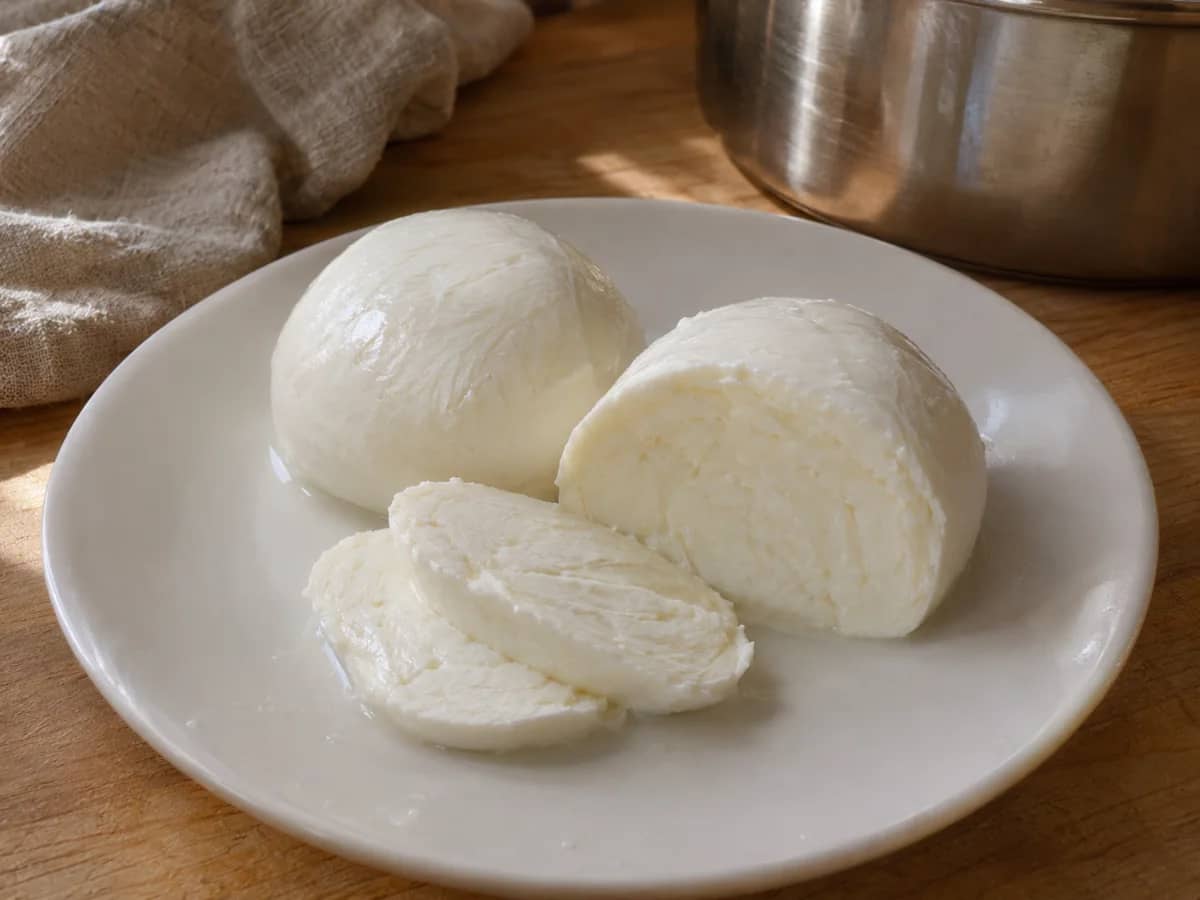
Drain and refrigerate in a covered container for at least 20 minutes before slicing. Serve fresh or drain well for pizza. Homemade mozzarella can be wetter than commercial shredding cheese.
The step photos are illustrative.
Notes
Tips and storage
Use within 2–3 days. Failure to stretch despite sufficient heat may mean unsuitable milk or acidity. Do not add acid blindly or keep kneading until dry. Lemon juice is not a precise citric-acid substitute. Do not equate tablets with ml without label instructions. Not kitchen-tested. Contains milk. Use clean, sanitized equipment and refrigerate at 4 °C or below. This is not a shelf-stable canned product.
Nutrition facts
1 of 9 servings, about 50 g
- Protein
- 9 g
- Carbohydrates
- 1 g
- Fat
- 11 g
Estimated per serving; yield, moisture and brands affect the values.
Reference source: Generic fresh whole-milk mozzarella proxy; editorial estimate
For general information only; it does not replace advice from a qualified health or nutrition professional.
About this recipe
Use pasteurized non-UHT milk, food-grade citric acid and rennet. Four litres yield roughly 400–500 g. You need a thermometer, scale, graduated syringe and food-safe heat-resistant gloves. Allow about 120 minutes; milk affects the result.
Frequently asked questions
Can I use vinegar alone?
This recipe uses rennet and citric acid. Vinegar-set milk does not reliably produce stretching mozzarella.
Why does it tear?
It may be cold or have unsuitable acidity. Gently rewarm one portion; if it still tears, do not force the entire batch.