
Main dishes
Colombian Bean Stew: Creamy Antioqueño Cazuela de Frijoles
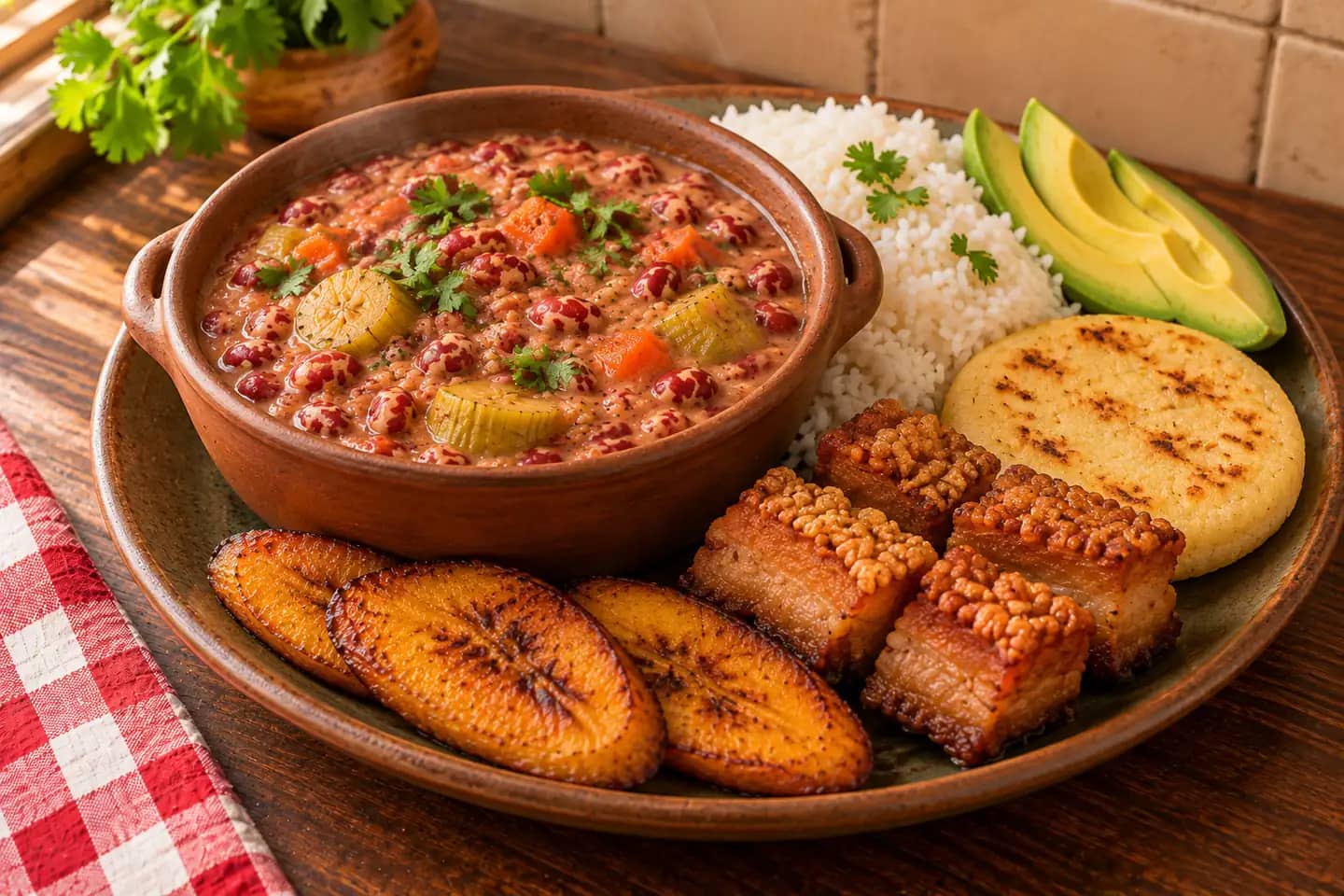
Colombian bean stew with green plantain, carrot and hogao. Thick, creamy broth, with optional pork and traditional sides.
- Total time
- 600 min
- Servings
- 6
- Difficulty
- Medium
- Cuisine
- Colombian
Ingredients
For the beans
For the hogao
To serve (optional)
Method
Soak the beans
Put the beans in a large bowl and cover them with cold water, about 3 finger-widths above. Soak for 8 to 12 hours. Drain, discard the soaking water, and rinse them.
Cook the beans with plantain and carrot
Put the beans in a pot with 2.5 liters of fresh water (and the pork, if using). Boil hard for 10 minutes, skim off the foam, and lower the heat. Simmer partially covered for about 60 minutes, or 30 minutes in a pressure cooker. Add the plantain and carrot and continue for 20 more minutes.
Make the hogao
Meanwhile, heat the oil over medium heat and sauté the onion for 3 minutes. Add the tomato, garlic, cumin and achiote and cook for 8 to 10 minutes, until the tomato breaks down and the oil turns reddish.
Add the hogao
Once the beans are tender and mash easily between your fingers, add the hogao to the pot and mix well. Season with the salt.
Mash part of the beans
Scoop out two cups of beans with their broth (about 400 g), mash them with a potato masher or in a blender, and return them to the pot. This step thickens the broth naturally.
Cook until it thickens
Simmer for 15 to 20 minutes over low heat, uncovered, stirring from the bottom so it doesn't stick, until the broth has the consistency of a thick cream. If it gets too thick, add a little hot water.
Prepare the sides
While it thickens, fry the chicharrón (300 g of pork belly strips) over medium heat for 20 to 25 minutes until crisp, and brown the ripe plantain, sliced 1 cm thick, for 2 to 3 minutes per side. Cook the rice.
Let it rest and serve
Let the cazuela rest for 5 minutes and serve it piping hot in a deep bowl or clay cazuela, with white rice, sliced avocado, arepa, chicharrón and fresh cilantro.
The step photos are illustrative.
Notes
Tips
- Boil the beans hard for the first 10 minutes and cook them until very tender: undercooked red kidney beans contain a lectin (phytohemagglutinin) that can cause digestive upset.
- Always discard the soaking water.
- If using a pressure cooker, count about 30 minutes from when it starts whistling, and let the steam out before opening.
- The pork is optional: if you add it, make sure it reaches at least 145°F (63°C) inside.
Substitutions
- Cargamanto beans: red kidney beans, cranberry (borlotti) beans or pinto beans, in the same amount.
- No green plantain: potato, cut into pieces of the same size.
- No achiote: sweet paprika.
- Vegetarian version: leave out the pork and chicharrón.
Storage
Cool the beans and refrigerate them within 2 hours, in closed containers. They keep for 3 to 4 days and reheat until boiling. You can freeze portions for up to 3 months; when reheating you may need to add water to loosen the broth.
Sources: USDA FSIS, minimum safe temperatures; USDA FSIS, leftovers and food safety; FDA, Bad Bug Book (phytohemagglutinin in red kidney beans).
Nutrition facts
1 serving (1/6 of the recipe, without pork or sides)
- Protein
- 21 g
- Carbohydrates
- 65 g
- Fat
- 3 g
- Saturated fat
- 1 g
- Fiber
- 23 g
Estimated values from USDA FoodData Central, adding up the raw ingredients and dividing by 6 servings. Does not include the optional pork, rice, chicharrón or other sides, or the salt.
Reference source: USDA FoodData Central (SR Legacy)
For general information only; it does not replace advice from a qualified health or nutrition professional.
About this recipe
Cazuela de frijoles is a dish from Antioqueño cuisine, in northwestern Colombia. The beans -- traditionally the speckled cargamanto bean -- are cooked together with green plantain and carrot, mixed with a hogao of onion and tomato, and part of it is mashed so the broth turns thick and creamy without adding flour or cream. In some places it's spelled "casuela".
It's served hot with white rice, avocado, arepa, chicharrón and fried ripe plantain, though this version also works on its own, without meat. The pork is optional: if you add it to the pot, the broth gains flavor and body.
Frequently asked questions
How long do the beans take to cook?
About 60 minutes in a regular pot, plus 20 with the plantain and carrot, or about 30 minutes in a pressure cooker. Before that, soak them for 8 to 12 hours.
Which bean is used?
Traditionally the cargamanto bean, large and speckled. If you can't find it, red kidney beans, cranberry beans or pinto beans work.
How do I get the broth creamy?
Mash two cups of beans with their broth, return them to the pot, and simmer uncovered over low heat until it thickens. No flour needed.
Can it be made without meat?
Yes. Leave out the pork and chicharrón. The hogao, green plantain and carrot add plenty of flavor.