
Main dishes
Japanese Teriyaki Chicken: Homemade Recipe with a Glossy Sauce
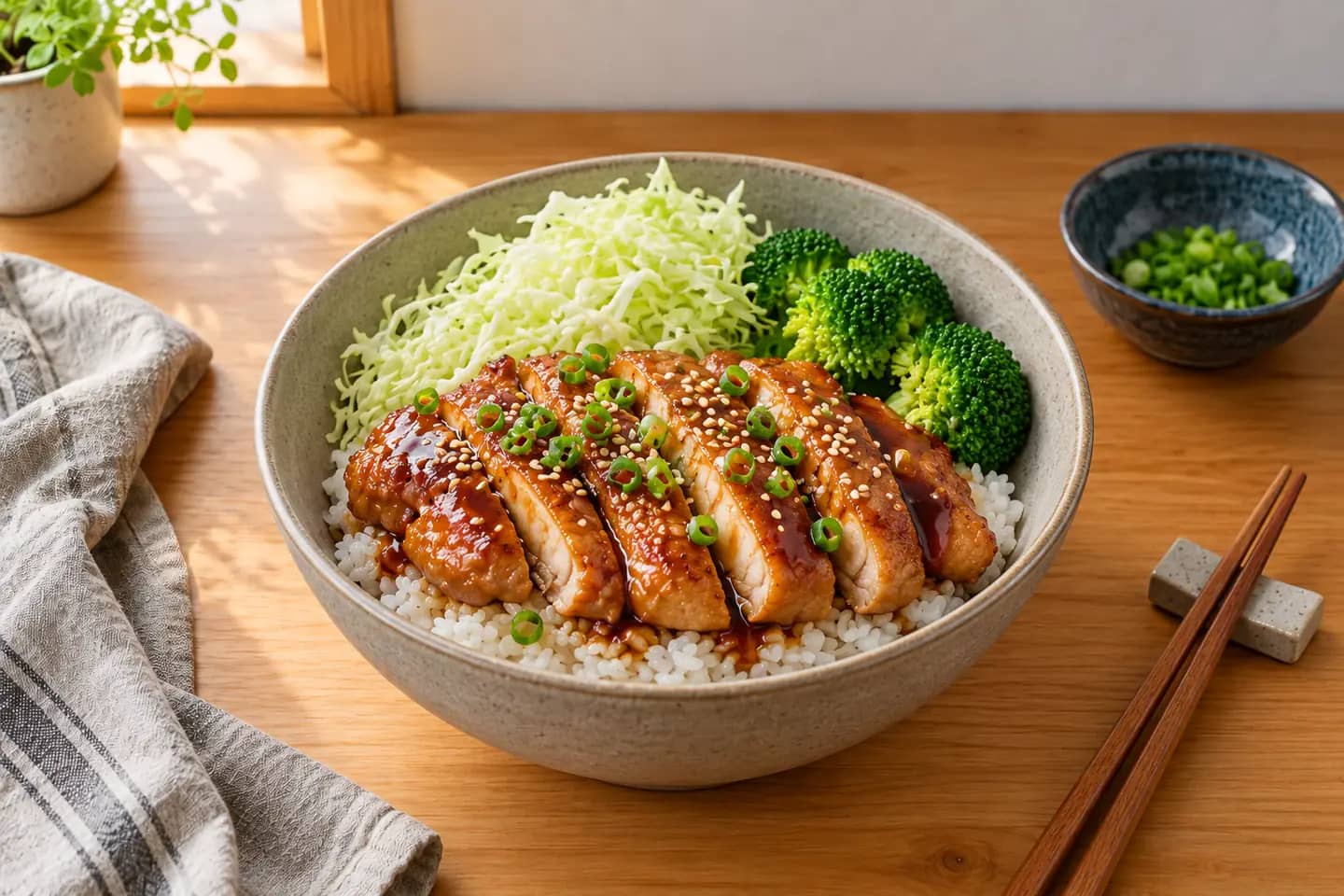
Japanese-style teriyaki chicken: skin-on thighs seared in a skillet and glazed with soy sauce, sake and mirin. Served over rice.
- Total time
- 35 min
- Servings
- 4
- Difficulty
- Easy
- Cuisine
- Japanese
Ingredients
For the chicken
For the teriyaki sauce
To serve
Method
Prepare the chicken
Pat the thighs dry with paper towels and spread them out so they're an even thickness. Poke the skin 8 to 10 times with a fork so it doesn't shrink and absorbs the sauce better. Trim off any excess fat.
Mix the sauce
In a bowl, mix the soy sauce, sake, mirin and sugar until the sugar dissolves. This is the 2:2:2:1 ratio used to make homemade teriyaki in Japan.
Sear the chicken skin side down
Heat the oil in a skillet over medium-high heat and place the thighs skin side down. Cook for 5 to 6 minutes without moving them, until the skin is golden and crisp.
Flip and cook covered
Flip the chicken, lower the heat, cover and cook for 3 minutes. Blot away any fat the skillet has released with paper towels so the sauce clings better.
Add the sauce and glaze
Pour the sauce into the skillet and raise the heat to medium. Cook for 3 to 4 minutes, turning the chicken and spooning the sauce over it, until it bubbles and starts to thicken.
Reduce until glossy and check doneness
Keep cooking until the sauce reduces by half and forms a glossy glaze that coats the back of a spoon. Check with a thermometer that the center of the thighs reaches 165°F (74°C).
Rest and slice
Move the chicken to a cutting board, let it rest for 3 to 5 minutes, then slice it into diagonal strips about 2 cm (3/4 in) thick. Reserve the sauce left in the skillet.
Serve with rice, cabbage and broccoli
Steam the broccoli for 3 minutes. Serve the chicken over hot rice, with the shredded cabbage and broccoli on the side, drizzle with the reserved sauce, and finish with the sesame seeds and scallion.
The step photos are illustrative.
Notes
Tips
- Well-dried skin and a hot skillet are what give crispy skin and keep the chicken from sticking.
- Don't crowd the skillet; sear the thighs in batches if needed.
- The sauce burns easily because of the sugar: watch the heat at the end and always keep some liquid in the pan.
- The chicken needs to reach 165°F (74°C) in the center.
Substitutions
- No sake: water or dashi stock, in the same amount; it comes out slightly less aromatic.
- No mirin: increase the sugar to 3 tablespoons and add 2 tablespoons of water.
- Skinless breast: cook 2 to 3 minutes less per side so it doesn't dry out.
- Gluten-free: use tamari instead of soy sauce.
Storage
Store the chicken with the sauce in a closed container in the fridge within 2 hours of cooking it. It keeps for 3 to 4 days and reheats until the center reaches 165°F (74°C).
Sources: USDA FSIS, minimum safe temperatures; USDA FSIS, leftovers and food safety.
Nutrition facts
1 serving (1/4 of the recipe, with rice and vegetables)
- Protein
- 33 g
- Carbohydrates
- 64 g
- Fat
- 26 g
- Saturated fat
- 7 g
- Fiber
- 3 g
Estimated values from USDA FoodData Central, adding up the raw ingredients and dividing by 4 servings. Some of the chicken fat stays in the skillet, so the actual value may be lower. The alcohol in the sake and mirin partly evaporates.
Reference source: USDA FoodData Central (SR Legacy)
For general information only; it does not replace advice from a qualified health or nutrition professional.
About this recipe
"Teriyaki" (照り焼き) isn't a bottled sauce but a Japanese technique: "teri" means shine, and "yaki" means cooking on a griddle or in a skillet. The chicken is seared and then glazed with a homemade sauce of soy sauce, sake, mirin and sugar that reduces until glossy.
In Japan, skin-on chicken thigh is used and served over rice, with sides like shredded cabbage or broccoli. This recipe follows that idea: cook the chicken in the skillet, keep the vegetables on the side, and use the sauce left in the pan to drizzle over the rice.
Frequently asked questions
What is teriyaki?
It's a Japanese technique where food is cooked and then glazed with a sauce of soy sauce, mirin, sake and sugar. Its name comes from "teri" (shine) and "yaki" (cooking on a griddle or in a skillet).
What ratio does homemade teriyaki sauce use?
Two parts soy sauce, two parts sake, two parts mirin and one part sugar (2:2:2:1). In this recipe that's 4, 4, 4 and 2 tablespoons.
Which part of the chicken is best?
Boneless thigh with skin on: it stays juicy, and the skin helps the glaze cling. With breast, cook a bit less so it doesn't dry out.
How do I know when the chicken is done?
When the center of the thigh reaches 165°F (74°C). A kitchen thermometer is the most reliable way to check.