
Starters & appetizers
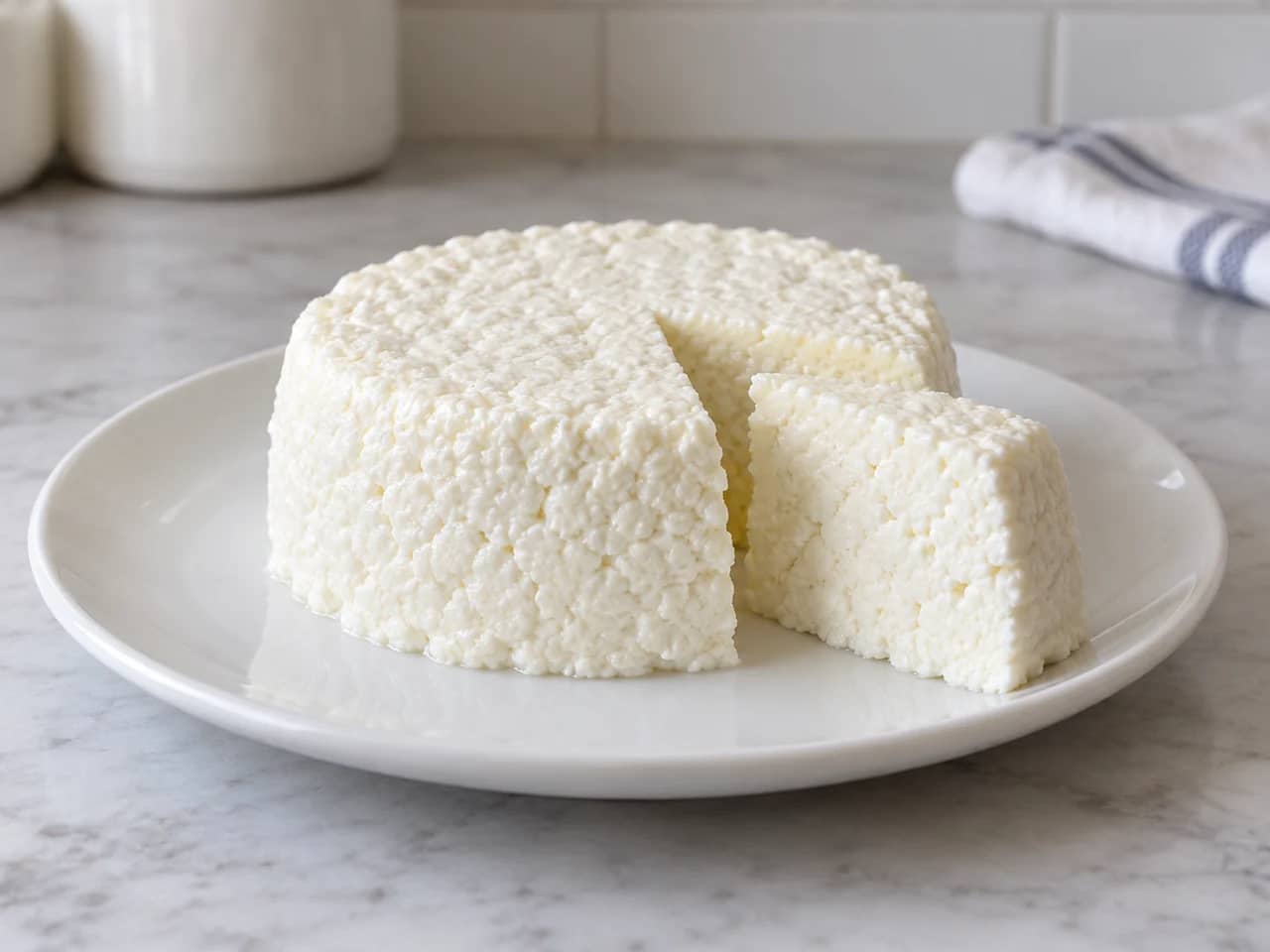
How to make fresh white cheese at home
Pasteurized milk, vinegar and salt: fresh white cheese with draining, chilling and weighed portions.
- Total time
- 150 min
- Servings
- 8
- Difficulty
- Medium
- Cuisine
- Home cooking
Ingredients
Cheese
Coagulation
Cheese
Method
Prepare clean ingredients and equipment
Use 2000 ml fresh pasteurized whole cow's milk, within its date and kept at 4 °C or below; do not use raw, spoiled or UHT milk for this proposal. Measure up to 75 ml food-grade white vinegar with 5 % acidity, 150 ml drinking water and 2.5 g fine salt. Set out a heavy pot, food thermometer, spatula, stable strainer, heatproof bowl, small perforated mold, tray and new food-safe cheesecloth. Wash hands with soap and water for at least 20 seconds. Wash and rinse equipment and surfaces; prepare the cloth according to its instructions, including washing, rinsing and boiling-water treatment if suitable. Keep it away from dirty cloths and the sink. Clear refrigerator space for the mold and separately collected whey.
Heat with a thermometer without scorching
Pour milk into the pot and heat gently over low to medium heat, stirring along the bottom. Allow about 15 minutes to reach 80 °C, checking the clean thermometer rather than the clock. Then hold at 80 °C for 20 minutes, adjusting heat and stirring gently without a rolling boil. Proposed cooking time is 35 minutes overall. This does not sterilize milk or the kitchen and does not justify using raw or spoiled milk. Stay with the pot and add any extra actual heating time to the total.
Add acid and observe separation
Mix vinegar and drinking water in a clean jug. Remove the pot from the heat. Slowly add 180 ml of the mixture first, containing 60 ml vinegar and 120 ml water, with gentle movements. If the liquid remains clearly milky, gradually add the remaining mixture, up to the prepared 225 ml, without exceeding the original 75 ml vinegar. Look for white curd clumps separating from more translucent yellowish whey; do not beat the clumps apart. Rest off the heat for 5 minutes. Not all the mixture may be needed: record the amount used. If separation fails at this maximum after correct heating, check milk and declared acidity rather than adding unlimited acid.
Strain and drain without burns
Secure the strainer over a heatproof bowl and line with the prepared cloth. Slowly pour in hot curds and whey, protecting hands from steam and splashes; do not hold the strainer unsupported. Drain for 30 minutes on a clean surface protected from dust and raw foods. The strainer bottom must not touch collected whey. Never twist or squeeze hot cloth with bare hands. Separated whey is excluded from the cheese and its nutrition estimate; do not mix it back or count it in the stated servings. Move the cheese into refrigerated cooling promptly after draining.
Salt and fill the mold
When the container can be handled without burns, transfer curd with a clean spoon to a clean bowl. Gently fold in the 2.5 g salt without herbs, oil or spices. Fill the small perforated mold lined with clean cloth, fold the cloth over the top and settle with the spoon rather than pressing by hand. Set the mold over a tray collecting whey without immersing the cheese. Do not add improvised weights or promise aged-cheese texture. This is fresh acid-coagulated white cheese, not mozzarella or a cheese that necessarily melts.
Chill while drainage finishes
Immediately refrigerate the mold and tray at 4 °C or below. Protect the surface without sealing the still-warm cheese airtight and keep separate from raw foods. Allow a proposed 60 minutes to chill and finish draining; use a clean thermometer to check that the center reaches 4 °C or below before unmolding and closing its storage container. If longer is needed, continue in the refrigerator and record the delay: the planned hour does not guarantee actual cooling. Remove tray whey so it cannot touch the curd. Do not finish cooling at room temperature.
Weigh cheese and adjust portions
Unmold cold cheese into a clean container and weigh only finished curd, excluding cloth, mold and whey. A yield of 400 g and 8 portions of 50 g is proposed pending a kitchen test, not a confirmed yield from these 2000 ml milk. If the final mass differs, keep each portion at 50 g and adjust the serving count to the actual weight. Nutrition shown refers to 50 g of comparable USDA white cheese, not all milk nutrients divided by 8. Its moisture, salt and composition may differ from homemade cheese. Do not assign discarded whey to the cheese or invent retention percentages.
Serve cold and store briefly
Serve cold cheese in weighed 50 g portions, excluding accompaniments from the calculation. Proposed times are 20 minutes preparation, 35 cooking and 95 waiting: 5 coagulation, 30 draining and 60 chilling; total 150 minutes. These are estimates without a confirmed kitchen test. Store covered at 4 °C or below and use within 2 days as a conservative proposal, not tested shelf life; respect shorter milk or handling limits. Freezing may change texture. Limit cumulative time outside refrigeration to 2 hours, or 1 hour above 32 °C, and discard if exceeded. Smell alone is not a safety check. Contains milk and lactose; it is not lactose-free. For especially vulnerable people, unvalidated homemade cheese is not equivalent to a controlled commercial product.
The step photos are illustrative.
Notes
Nutrition facts
50 g finished cheese, weighed; total yield unconfirmed
- Protein
- 10.2 g
- Carbohydrates
- 1.3 g
- Fat
- 12.2 g
- Saturated fat
- 6.8 g
- Sugars
- 0.9 g
- Sodium
- 352 mg
Finished-food proxy, not a laboratory analysis, measured homemade composition or confirmed yield. Moisture, fat and salt may differ. Milk, vinegar and water produce separated whey; their nutrients are not assumed to remain entirely in cheese. Proposed 400 g yield is unmeasured; estimates are per actual 50 g cheese even if serving count changes. Fiber absent from the USDA entry is omitted rather than set to zero. Confirm composition and yield from the actual result.
Reference source: USDA FoodData Central — SR Legacy (abril de 2018)
For general information only; it does not replace advice from a qualified health or nutrition professional.
About this recipe
Fresh white cheese made with pasteurized milk and vinegar, using controlled heating, curd separation, draining and chilling. Allow a proposed 150 minutes and 8 portions of 50 g; yield remains unmeasured and nutrition uses a comparable finished USDA white cheese.
Frequently asked questions
Why does milk fail to separate, and can I use UHT?
Milk treatment and actual acidity affect separation. Use fresh pasteurized whole milk for this proposal, not UHT. Check the thermometer and food-grade vinegar's 5 % acidity. Add diluted acid gradually up to the stated limit, never indefinitely, and never use spoiled milk.
How much cheese will I get, and how is nutrition estimated?
400 g and 8 portions of 50 g are unconfirmed proposals. Weigh cold drained curd and adjust the count, keeping 50 g per portion. Values use comparable finished USDA white cheese, without counting all milk or inventing whey losses. Salt and moisture may differ. Missing fiber is not shown as zero.
How should I store it, and can I change the salt?
Keep covered at 4 °C or below and use within 2 days as a conservative proposal, not tested shelf life. Discard if the stated time outside refrigeration is exceeded. Record salt changes as a new formula; the USDA reference does not measure actual homemade salt content. Contains milk and lactose, and is not aged cheese.