
Main dishes
Homemade salmon and avocado sushi
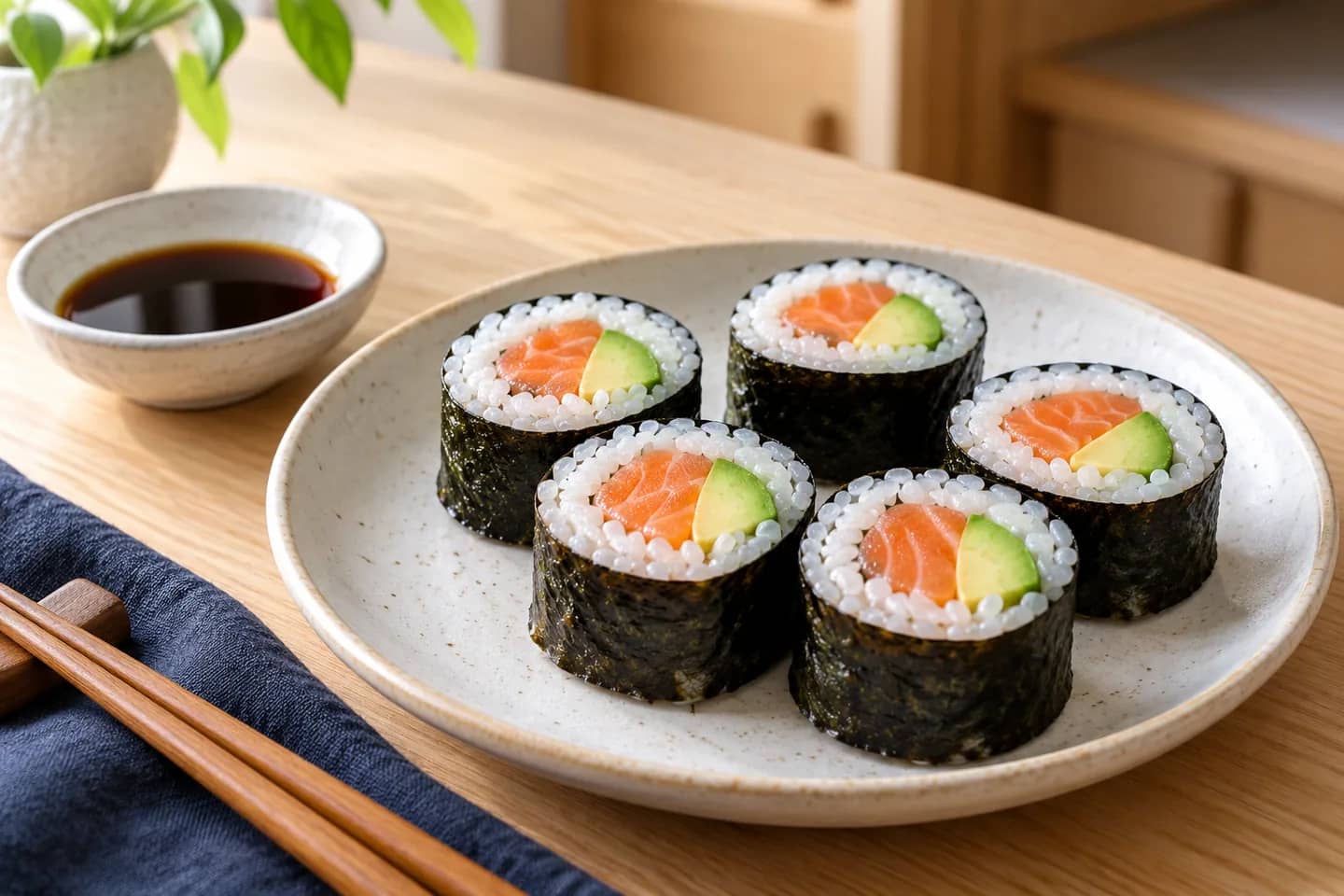
Make salmon and avocado sushi with seasoned rice, nori on the outside and a simple filling. Learn how to cook the rice, roll and cut the maki.
- Total time
- 110 min
- Servings
- 4
- Difficulty
- Medium
- Cuisine
- Japanese
Ingredients
Method
Rinse and drain the rice
Put the 400 g rice in a bowl and rinse with cold water, stirring gently and changing the water 4–5 times until nearly clear. Drain in a sieve for 30 minutes. Rinsing water is separate from the measured 520 ml cooking water.
Cook the rice covered
Put the drained rice and 520 ml water in a heavy saucepan. Cover and bring to a gentle boil. Reduce the heat to its lowest setting and cook for 12–15 minutes without stirring or lifting the lid, until the water is absorbed. Follow your rice packet if it specifies different water or timing.
Make the vinegar seasoning
While the rice cooks, combine the 60 ml vinegar, 25 g sugar and 6 g salt in a small saucepan. Warm gently for 1–2 minutes, stirring just until dissolved; do not boil. Remove from the heat.
Let the rice rest
Turn off the heat and leave the cooked rice covered in its pan for 10 minutes so the moisture evens out. Then uncover and gently separate the grains with a rice paddle without crushing them.
Season the rice
Transfer the still-hot rice to a wide glass or wooden dish. Pour the seasoning evenly over it. Use cutting and folding movements with a paddle to distribute the liquid without crushing the grains into a paste.
Cool the rice for assembly
Spread the rice in a shallow layer and gently fan it for about 15–20 minutes, until it reaches room temperature. Do not put salmon on hot rice. Assemble immediately; if delaying, cool and refrigerate the rice within the first hour after cooking.
Cut the salmon and avocado
Once the rice is ready, cut the 150 g avocado flesh into sticks. On a separate clean board, cut the 250 g cold salmon into strips about 1 cm thick. Divide both fillings into five portions and keep the fish refrigerated while preparing each roll. Wash hands and utensils after handling it.
Spread rice over the nori
Place a nori sheet shiny side down on a bamboo mat. Lightly dampen your hands and spread one fifth of the rice in an even layer without packing it too firmly. Leave a 2 cm strip of bare nori along the far edge.
Add the filling
Arrange one fifth of the salmon and avocado in a horizontal line across the near third of the rice. Extend the filling from side to side without piling it up. Keep the bare strip at the opposite edge clean for sealing.
Roll and seal the maki
Lift the near edge of the mat and wrap the nori around the filling. Press gently to form a cylinder, pulling the mat away as you roll so it stays outside. Slightly moisten the bare edge and seal. Set seam side down and repeat with the remaining four sheets.
Cut and serve the sushi
Use a sharp, slightly damp knife to cut each roll in half, then each half into four: eight pieces per roll and forty in total. Wipe the blade between cuts to avoid crushing the rice. Serve immediately, ten pieces per person, with the 40 ml soy sauce divided into separate dishes.
The step photos are illustrative.
Notes
Tips
- The words “fresh” or “sushi” do not replace confirmation from the supplier about raw use and parasite control. Freezing does not kill every harmful microorganism; cooking reduces risk further. Pregnant people, children, older adults and people with weakened immunity should avoid raw fish. Vinegar does not disinfect fish.
Substitutions
- If you cannot confirm the salmon's treatment, make a variation with salmon cooked to 63°C / 145°F in the centre and cooled quickly. Cucumber sticks can replace avocado, changing texture and nutrition. Use short-grain Japanese rice: long-grain rice will not stick in the same way.
Storage
Ideally assemble and eat immediately. Keep salmon at 4°C / 40°F or below and follow its label's date and handling instructions. Refrigerate leftover pieces immediately and eat within 24 hours of cooking the rice, or sooner if the fish requires it. Discard perishables left unrefrigerated for over 2 hours, or 1 hour above 32°C / 90°F.
Sources: USDA FoodData Central; MEXT — toasted nori; FDA — Seafood safety; Food Standards Scotland — Food storage.
AI-generated illustrative photographs for this recipe.
Nutrition facts
10 pieces (1/4 of the recipe), with 10 ml soy sauce
- Protein
- 22 g
- Carbohydrates
- 91 g
- Fat
- 15 g
- Saturated fat
- 3 g
- Fiber
- 5 g
Estimated per serving, including all the stated soy sauce. Brands, nori sheet size and fish vary.
Reference source: USDA FoodData Central — SR Legacy. MEXT 2023 (nori)
For general information only; it does not replace advice from a qualified health or nutrition professional.
About this recipe
These salmon and avocado maki have nori on the outside and a layer of seasoned rice around the filling. The recipe explains how to rinse, cook, rest and cool the rice before assembling the rolls. It makes five rolls, cut into forty pieces for four servings. Buy salmon prepared by a supplier for eating raw and keep it chilled. Total time includes draining, covered resting and cooling the rice, but not thawing the fish beforehand.
Frequently asked questions
Can I use any fresh salmon?
No. Buy salmon intended for raw consumption and confirm parasite controls with the supplier. If you cannot confirm them, use the cooked variation. Freezing does not kill every harmful microorganism.
Why does my roll open up?
Too much filling or rice on the sealing edge can stop it closing. Leave a 2 cm bare strip, moisten it slightly and rest the roll seam side down.
Can I prepare the rice in the morning?
Do not leave it at room temperature for several hours. Cool quickly and refrigerate within the first hour if not assembling immediately. Eat within 24 hours; refrigeration makes the rice somewhat firmer.