
Breads & doughs
Argentine baked beef empanadas
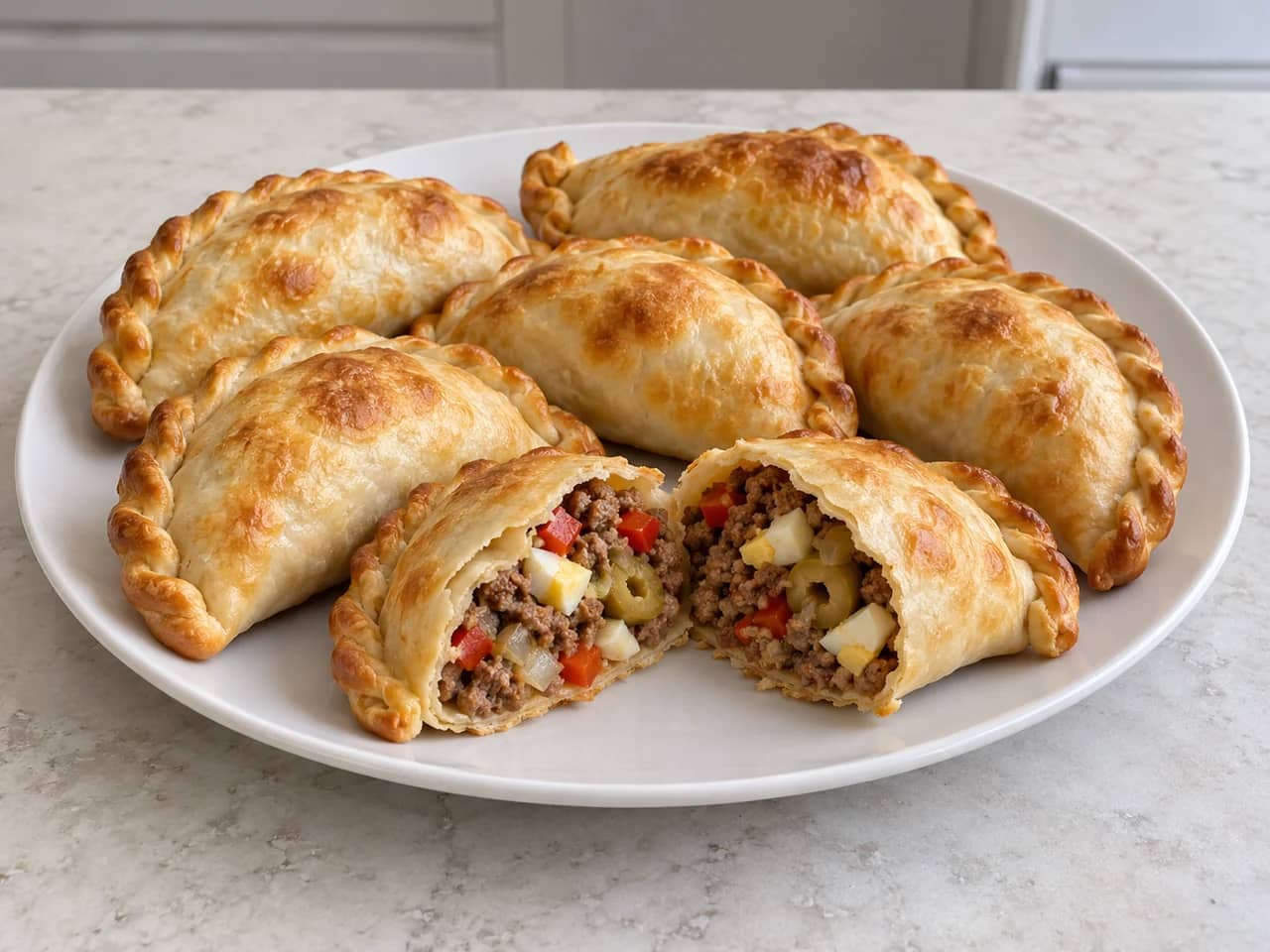
Homemade dough with beef, onion, sweet pepper, egg and olives, with the filling chilled before shaping and a folded seam explained in stages.
- Total time
- 215 min
- Servings
- 10
- Difficulty
- Medium
- Cuisine
- Argentine
Ingredients
Dough
Filling
Finish
Method
Weigh the ingredients and prepare the vegetables
Set aside 20 g of the 500 g flour for rolling, leaving 480 g for the dough. Peel the 300 g onion and cut into approximately 5 mm dice; dice the 100 g red sweet pepper with its seeds removed. Drain, weigh and slice the 60 g pitted olives. Measure 8 g salt for the dough and 6 g for the filling separately. Keep the 500 g ground beef at 4°C or below until cooking. Prepare a wide frying pan, a shallow metal tray for chilling the filling, a rolling pin and two baking trays approximately 45×35 cm, lined with baking paper. Wash hands and utensils after handling raw beef or eggs.
Make the dough and rest it for 30 minutes
Melt the 100 g unsalted butter and let its strong heat subside without burning it. Dissolve 8 g salt in 200 ml warm water. Put 480 g flour in a bowl, add the water and butter, then mix. Knead for approximately 5–6 minutes until uniform and flexible; do not add flour beyond the reserved 20 g. If sticky, let it cool for a few minutes before assessing the texture. Wrap or cover well and rest for 30 minutes. This rest is included in the total time and helps the discs roll out without shrinking.
Hard-boil the two filling eggs
Put the 2 eggs intended for the filling in a saucepan and cover with drinking water approximately 3 cm above them. Bring to a gentle boil, allowing approximately 5 minutes depending on the pan, then cook for 12 minutes from the start of boiling; both white and yolk should be firm. Cool in cold water for approximately 5 minutes, peel and dice. Allow approximately 100 g cooked peeled egg in total; the actual weight depends on egg size. Cover in a clean container and refrigerate while finishing the filling. The cooking water does not enter the dough or nutrition calculation.
Soften the onion and sweet pepper
Heat 20 g olive oil in the frying pan over medium heat. Add onion and sweet pepper and cook for approximately 8 minutes, stirring, until the onion is translucent and the pepper begins to soften. Lower the heat if they brown before softening. Do not add the cooked egg or olives yet. The base should retain moisture without a puddle of water.
Cook and season the beef
Add 500 g ground beef and break it into small pieces with a spatula. Cook for approximately 10 minutes over medium heat, stirring so no raw clumps remain. Add 3 g sweet paprika,2 g cumin,1 g black pepper and 6 g salt during the last 2 minutes. Use a thermometer to check that several areas of the filling reach at least 72°C; continue and check again if needed. Colour does not replace measurement. Keep the filling juices and fat, which are included in the estimate; avoid free liquid that could soak the dough, and do not add unlisted stock or fat.
Chill the filling, then add egg and olives
Immediately transfer the cooked beef, vegetables and juices to the clean tray in a layer less than 2 cm deep. Refrigerate rather than waiting for a large pan to cool on the counter; use a clean loose cover that allows steam to escape, then cover fully once cold. Allow approximately 60 minutes, but wait until the filling is 4°C or below and add any extra time needed to the total. Fold in the diced 2 hard-boiled eggs and 60 g olives. Mix with a clean utensil and keep refrigerated until filling the dough. Hot filling softens dough and makes sealing difficult.
Divide the dough and roll 20 discs
Preheat the oven to 210°C conventional heat or 190°C fan while assembling. Divide the rested dough into 20 equal portions of approximately 39–40 g. Roll each into a disc approximately 14 cm wide and 2–3 mm thick. Use only the reserved 20 g flour across the work surface and rolling pin, brushing off the excess. Keep discs covered so their edges do not dry.
Divide the cold filling among the discs
Take only the filling needed immediately out of the fridge. Divide all the filling into 20 equal portions, approximately 45–50 g per empanada depending on actual evaporation. Place each portion in the centre of a disc, leaving approximately 2 cm of clean border. Each portion should contain beef, vegetables, egg and olives; never add an olive stone. If the filling will not fit without forcing it, adjust the 20 equal portions. Do not leave filling outside the estimate or increase the number of empanadas without recalculating.
Fold into half-moons and seal the seam
Fold each disc over the filling into a half-moon. Gently release trapped air without flattening the dough, then press the clean edges together. Moisten the edge very lightly with drinking water if necessary, without soaking it. Fold the edge inward successively to make a continuous repulgue seam, or seal with a fork if easier. No specific regional number of folds is promised. Arrange the 20 empanadas across the prepared trays with approximately 2 cm between them and no stacking.
Brush with the finishing egg
Crack the reserved brushing egg, approximately 50 g without shell, into a clean bowl and beat until white and yolk combine. Brush a thin layer over the 20 empanadas without flooding the seam or leaving puddles. The estimate conservatively includes the complete 50 g; leftover egg in the bowl is not reused as ready-to-eat food. Add neither milk nor oil. Put the trays in the preheated oven without prolonging the filling's time outside refrigeration.
Bake until the centre reaches 74°C
Bake both trays for approximately 25 minutes, starting to check at 20. Halfway through, rotate them and swap their heights using oven gloves if the oven browns unevenly. Dough should be golden and the base cooked, with no wet band. Because the cooked filling was chilled, use a fine probe to check that empanadas from both trays reach at least 74°C in the centre; continue baking if necessary even when golden. This assumes both trays fit at once. If two batches are required, add approximately 25 minutes plus any time needed for the actual temperature check, and refrigerate the second batch while it waits.
Rest for 5 minutes and serve
Rest on a rack for approximately 5 minutes so the filling loses its fiercest heat without making the base damp. Serve 2 empanadas per portion:20 units for 10 servings. That is 60 minutes of preparation,60 of cooking and 95 of resting and chilling—30 for dough,60 for filling and 5 at the end—totalling 215 minutes when following these stages without deducting overlaps. Add any additional chilling, extra batch or necessary prior thawing. The finished-dish image illustrates this phase; sauces and side dishes are not included.
The step photos are illustrative.
Notes
Nutrition facts
2 of the 20 empanadas;10 servings
- Protein
- 17.7 g
- Carbohydrates
- 42.3 g
- Fat
- 18.2 g
- Saturated fat
- 8 g
- Fiber
- 2.4 g
- Sugars
- 2 g
- Sodium
- 693.6 mg
Estimated figures based on the ingredients. Actual cooked-egg weight, beef fat, olive salt, discarded juices and unused flour or egg change the result. Excludes sauce, sides, extra oil and bought wrappers. Only available USDA values are used, including explicitly reported zeros; missing data is not converted to zero.
Reference source: USDA FoodData Central — SR Legacy (abril de 2018)
For general information only; it does not replace advice from a qualified health or nutrition professional.
About this recipe
A homemade recipe for 20 Argentine baked beef empanadas: wheat-and-butter dough filled with beef, onion, red sweet pepper, hard-boiled egg and green olives. Cook the filling, chill it before shaping, then heat it thoroughly again in the oven. Makes 10 servings of 2 empanadas, with an estimated 215 minutes including resting and chilling.
Frequently asked questions
Why must the filling be cold?
Hot filling softens dough and makes sealing difficult. Spread it less than 2 cm deep, refrigerate immediately and wait until 4°C or below. The 60 minutes are an estimate, not a guarantee; add the actual extra time before mixing in egg and olives.
Can I use bought empanada wrappers?
Yes, for 20 units of comparable size, following the maker's storage and preparation instructions. Weight, ingredients, allergens and nutrition will differ from this homemade dough. Do not treat their values as those of the flour and butter in this recipe; baking time can also change.
How do I stop them opening in the oven?
Use cold filling, a clean edge and moderate portions, then release trapped air before sealing. Press firmly and make a continuous folded seam or seal with a fork. Leave approximately 2 cm between empanadas. Golden dough does not replace checking 74°C in the centre after the filling has been chilled.