Side dishes
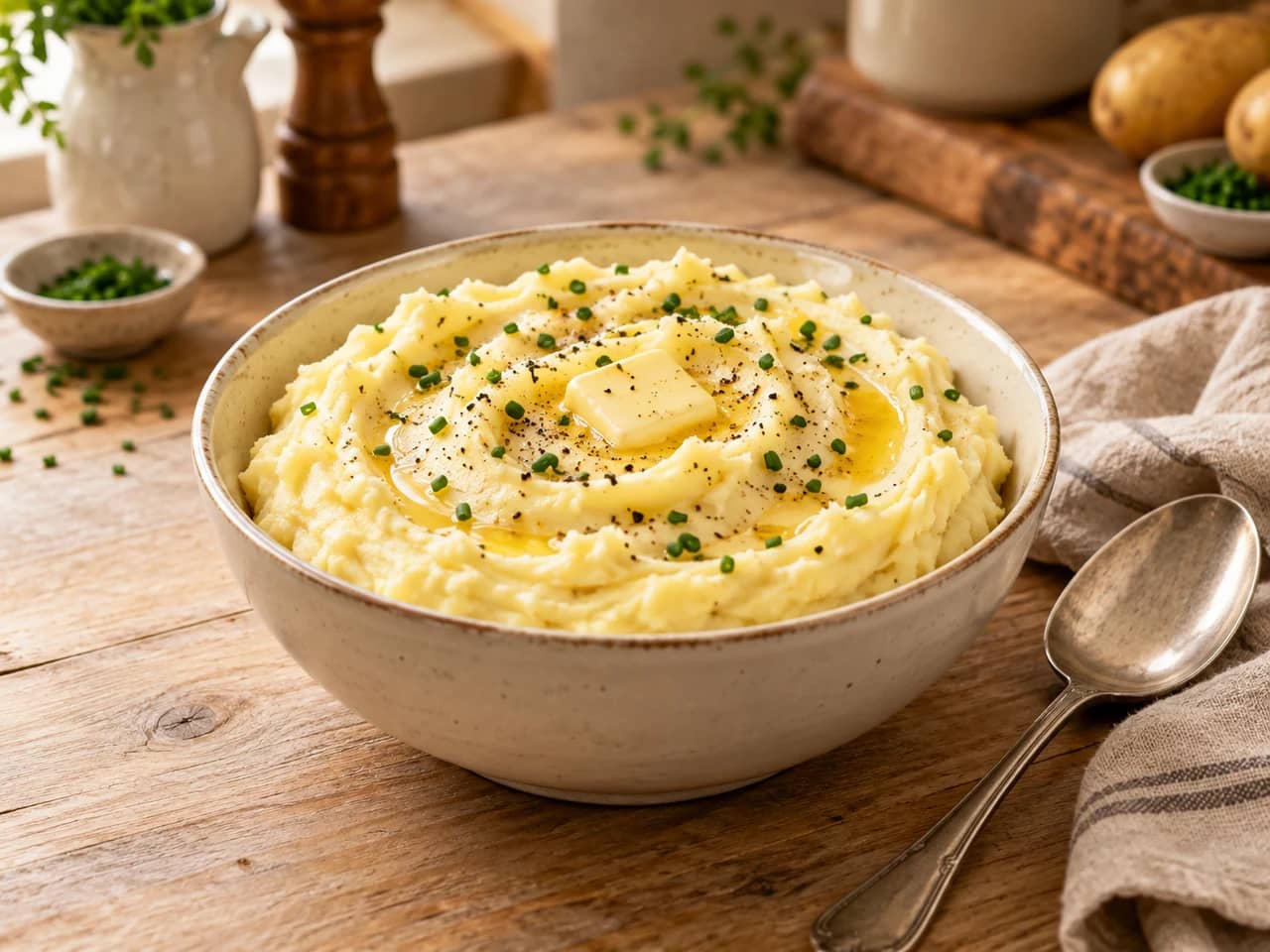
Creamy Mashed Potatoes: Easy Homemade Recipe with Butter and Milk
Creamy, lump-free mashed potatoes with floury potatoes, butter and hot milk. The trick: dry the potatoes well and never use a blender.
- Total time
- 40 min
- Preparation
- 15 min
- Cooking
- 25 min
- Servings
- 6
- Difficulty
- Easy
- Cuisine
- French
Ingredients
Quantities adjust to your servings. Times, temperatures and “to taste” stay the same.
To cook the potatoes
For the mash
To serve
Check off the ingredients you already have above.
Method
Follow the recipe one step at a time.
Peel and cut the potatoes
Peel the potatoes and cut them into even 4 cm (1 1/2-inch) chunks. When they are the same size, they all cook at the same time.
Start them in cold salted water
Put the potatoes in a pot, cover with cold water by 3 cm (1 inch) and add the coarse salt. Starting cold helps them cook evenly inside and out.
Cook until tender
Bring to a boil and cook over medium heat for 15 to 20 minutes, until a knife slides into the center of the chunks with no resistance.
Drain and dry the potatoes
Drain the potatoes well and return them to the pot over low heat for 1 to 2 minutes, stirring, so the excess water evaporates.
Heat the milk and butter
In a small saucepan, heat the milk with the butter over low heat for 3 to 4 minutes, until the butter melts, without letting it boil.
Rice the potatoes
Press the hot potatoes through a ricer or food mill into the pot. Do not use a blender or food processor: the mash turns gluey.
Fold in the milk and butter
Add the hot milk and butter in three additions, mixing with a spatula or wooden spoon just until combined.
Season and serve
Season with the fine salt, pepper and a pinch of nutmeg. Serve hot with a pat of butter and the chives on top.
The step photos are illustrative.
Notes
Tips
- Cut the potatoes the same size so they cook at the same time.
- Always start in cold, salted water: they cook evenly and are seasoned all the way through.
- The milk and butter should be hot; cold dairy cools the mash and is harder to incorporate.
- Mix only as much as needed: the more you work the potatoes, the more starch they release and the gluier they get.
- For an extra-smooth mash, pass it twice through the ricer or through a sieve.
Substitutions
- Milk: hot vegetable stock or an unsweetened plant-based milk.
- Butter: 60 ml (1/4 cup) extra virgin olive oil.
- Richer: replace 50 ml of the milk with heavy cream.
- Chives: chopped fresh parsley.
Storage
Cool the mash and refrigerate it within 2 hours in a closed container. It keeps for 3 to 4 days. Reheat it over low heat with a splash of milk, stirring, until steaming hot. It can be frozen for up to 1 month, although it turns slightly grainy when thawed.
Source: USDA FSIS, leftovers and food safety.
Nutrition facts
1 serving (1/6 of the recipe, about 200 g)
- Protein
- 5.2 g
- Carbohydrates
- 37.8 g
- Fat
- 14.6 g
- Saturated fat
- 9.1 g
- Fiber
- 2.6 g
- Sugars
- 2.9 g
- Sodium
- 464 mg
Estimated per serving, using potatoes, butter, whole milk and salt. Includes part of the salt from the cooking water.
Reference source: USDA FoodData Central, SR Legacy April 2018
For general information only; it does not replace advice from a qualified health or nutrition professional.
About this recipe
Mashed potatoes are the most versatile side dish in home cooking: they go with roasts, chicken, fish or meatballs, and they are the base of dishes like shepherd's pie. Three things make them creamy and smooth. The first is the potato: floury varieties such as russet or Yukon Gold break down better than waxy ones. The second is starting them in cold water and drying them well before mashing. The third is never using a blender or food processor, which releases starch and turns the mash gluey. With hot milk and good butter, the result is smooth, light and full of flavor.
Frequently asked questions
What are the best potatoes for mashed potatoes?
Floury potatoes, with more starch and less water: russet, Yukon Gold or other large yellow potatoes. Waxy potatoes, such as red-skinned ones, stay firmer and get pasty.
Why are my mashed potatoes gluey?
They were overworked, especially with a blender or food processor, which breaks the starch and makes the mash stretchy. Use a ricer or masher and mix only as needed.
How do I keep mashed potatoes from getting watery?
Drain the potatoes well and dry them for 1 to 2 minutes in the pot over low heat. Add the milk gradually until you reach the texture you want.
Can I make mashed potatoes ahead?
Yes. Keep them covered in the fridge for up to 3 days and reheat over low heat with a splash of milk, stirring, or in the microwave in short bursts.
Can I make mashed potatoes without milk?
Yes: use hot vegetable stock or an unsweetened plant-based milk, and olive oil instead of butter. They are less creamy but still tasty.