
Drinks
Homemade cappuccino with espresso and milk
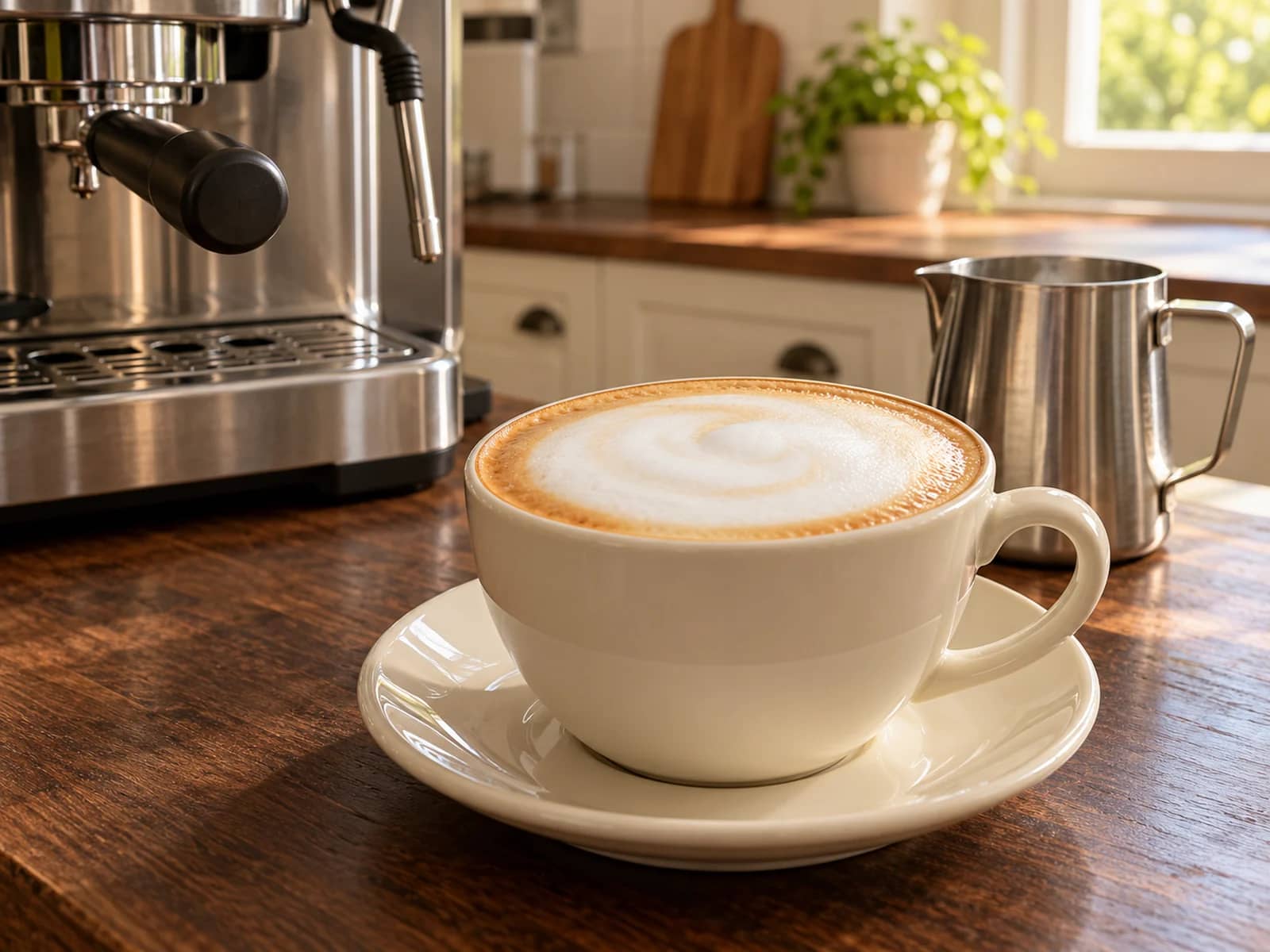
A cappuccino without added sugar, using 36 g espresso and 120 g whole milk, fine foam and a temperature check.
- Total time
- 10 min
- Servings
- 1
- Difficulty
- Medium
- Cuisine
- Italian
Ingredients
Coffee
Milk
Method
Prepare the cup, pitcher and milk
Use a 180–200 ml cup, a small steaming pitcher compatible with the milk quantity and a clean thermometer. Warm the cup with hot water and empty completely. Weigh 120 g cold milk at 4 °C or below into the pitcher; do not leave it at room temperature. Follow your machine manual for warm-up and purging.
Prepare and weigh the espresso
Brew espresso into the warm cup and weigh 36 g freshly extracted beverage, excluding the cup weight. If your machine cannot brew and steam simultaneously, follow its manual sequence and avoid leaving coffee for long. This is prepared liquid weight, not dry coffee. Add no sugar or cocoa in this version.
Texture the milk without boiling
Briefly purge the wand toward the drip tray, keeping hands away from steam. Put the tip near the surface of the 120 g milk and open the steam to introduce air with a gentle hiss, rather than large bubbles. Lower the tip slightly to create a whirlpool. Stop steam when the thermometer reads 55–60 °C, before removing the pitcher. Do not boil or rely on a fixed time: machine power varies.
Combine foam and clean the wand
Immediately wipe the wand with a clean dedicated cloth and purge as directed by the manual, avoiding burns. Tap the pitcher base gently on a cloth and swirl to combine foam and liquid. It should look glossy and fluid, without separate large bubbles. Do not steam already heated milk again.
Pour and serve immediately
Pour milk into the 36 g espresso in a continuous stream, bringing the pitcher closer at the end to deposit fine foam. Use all weighed milk for the estimate to apply; no pattern is required. Serve immediately and make sure the cup will not burn. The 180–200 ml volume depends on foam. Do not store this drink for reheating: discard leftover textured milk and keep unused cold milk refrigerated.
The step photos are illustrative.
Notes
Nutrition facts
1 cup with all measured milk
- Protein
- 3.8 g
- Carbohydrates
- 6.4 g
- Fat
- 4 g
- Saturated fat
- 2.3 g
- Fiber
- 0 g
- Sugars
- 6.1 g
- Sodium
- 57 mg
Nutrition information estimated from the ingredients (USDA FoodData Central). Brands may vary.
Reference source: USDA FoodData Central — SR Legacy, April 2018 JSON
For general information only; it does not replace advice from a qualified health or nutrition professional.
About this recipe
Fresh espresso is combined with pasteurised whole milk and fine foam. No cocoa, chocolate, cream or added sugar is included; the calculated sugars come mainly from milk. You need an espresso machine with a steam wand suitable for small quantities, a pitcher and a thermometer. The yield is one cup of about 180–200 ml depending on incorporated air. Allow an estimated 5 minutes preparation and 5 for coffee and milk, 10 overall once the machine is ready. Machine warm-up may add time.
Frequently asked questions
Why 36 g espresso rather than 36 g ground coffee?
It is the weight of prepared beverage. A starting point is 18 g dry coffee yielding 36 g espresso, a 1:2 ratio. Discard the grounds; they are not added to the cup or nutrition calculation.
Why does the foam have large bubbles?
Too much air or a tip placed too high is often responsible. Introduce air gently at first, then create a whirlpool and swirl the pitcher afterwards. Stop at 55–60 °C and do not steam the same milk again.
Can I store it or use another milk?
Serve immediately without storing for reheating. Lactose-free or plant milk changes foam and nutrition; this calculation covers pasteurised whole milk and its full measured weight only.